Click to discover your protective pattern
〰️
Click to discover your protective pattern 〰️
Couples Therapy for Both of Your Nervous Systems
Most couples therapy assumes you can both stay in the room for the hard conversations.
This work starts with what happens when you can't.

The pattern
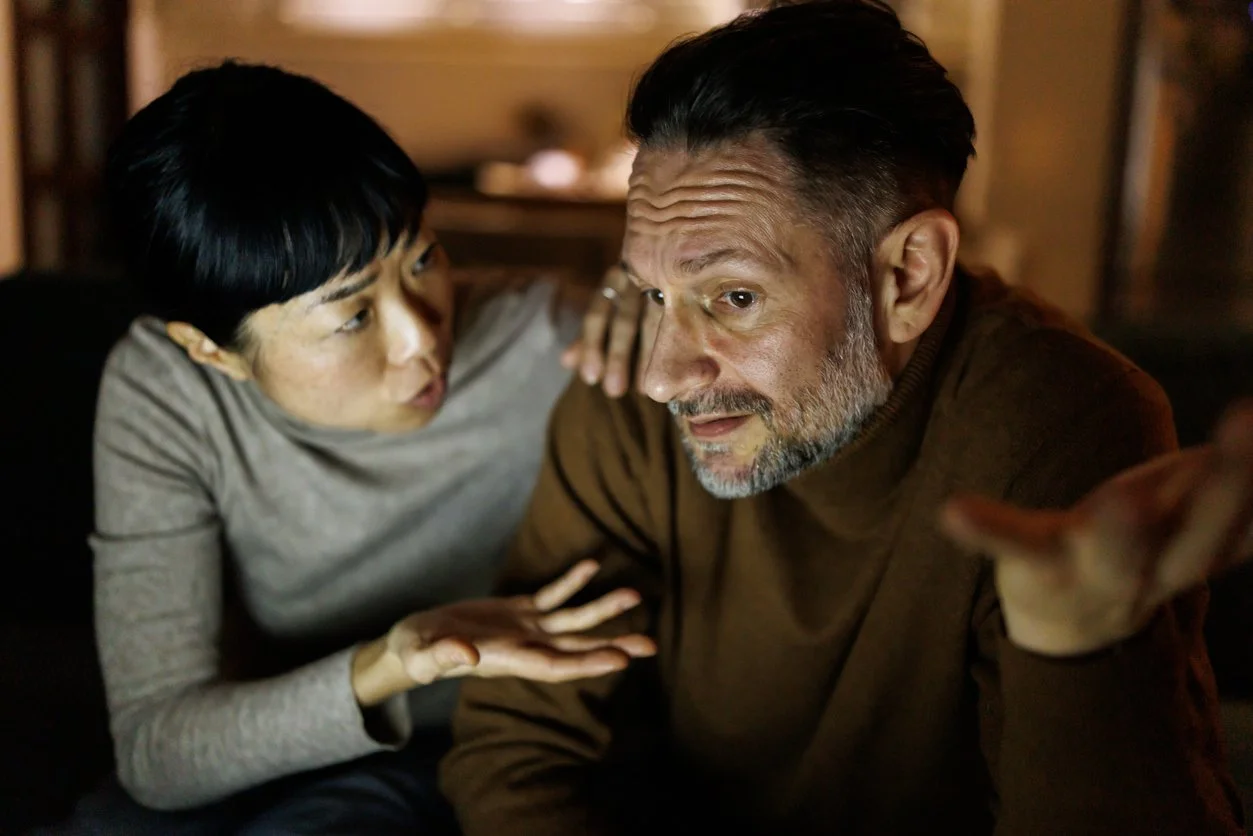
You've tried talking about it. It always seems to end the same way — one of you pushing to resolve it, the other going quiet, or one of you exploding while the other braces. And both of you further apart than when you started.
Neither of you is the problem. The problem is what happens between you when you're locked into protecting yourselves. The conversation is over before either of you can say what the other most needs to hear.
Why it keeps happening
The flooding, the snapping, the shame that arrives right after anger, the moments you go somewhere else entirely and come back to find the conversation already over — these responses developed to protect you, long before this relationship.
They were useful once. They're fast, they're automatic, and they fire before you've decided anything. Which is why knowing better doesn't help in the moment. The part of you that knows goes offline exactly when you need it.
What's different about this work
Most couples therapy starts with communication: better listening, better phrasing, fair fighting. Those skills are real, and they work only if both of you can stay settled enough to use them.
So we start earlier. Before the words, there's a question of capacity — whether your body can stay present while something difficult is happening between you. We build that first. The conversations get easier because you're both still there to have them.
How I work
Using attachment theory, Internal Family Systems, and somatic approaches, I help you slow down enough for your nervous system to register safety, so the parts running the show can stand down. I also draw on my training in creative arts therapies to reach what words alone can't.
I see couples together, and individuals untangling these patterns on their own.

Let's shift the patterns that keep pulling you apart.
Based in Providence, Rhode Island.
In person and online in Rhode Island; online in New York, Wisconsin, and Maine.